
Seeing a wild elk in the Rocky Mountains, spotting a roseate spoonbill in the Florida Everglades, or identifying a desert bighorn sheep in the Southwest can become the highlight of an entire trip.
The challenge is that responsible wildlife watching isn't just about finding animals. It's about observing them without disturbing their behavior, entering sensitive habitats, or contributing to overcrowding at fragile viewing locations.
After testing wildlife-focused apps across multiple U.S. ecosystems—including national parks, coastal wetlands, forests, deserts, and grasslands—the most useful tools were not necessarily the ones that promised the fastest sightings. The best apps helped users identify species, understand habitat preferences, learn seasonal patterns, and document observations ethically.
The following apps consistently delivered the most value.
Among all wildlife apps tested, iNaturalist was the most versatile.
Users can photograph animals, plants, insects, fungi, and other organisms, receive AI-assisted identification suggestions, and then have observations reviewed by a global community of naturalists. Observations can contribute to biodiversity research and conservation efforts.
What makes iNaturalist especially valuable for ethical wildlife watching is that it encourages observation and documentation rather than pursuit. Instead of directing users toward specific animals, it helps them understand what they are seeing in the ecosystem around them.
Covers far more than birds
AI-assisted identification backed by community review
Strong educational value
Supports citizen science and conservation
Free to use
Learning curve for beginners
Some identifications require community verification
Not designed as a wildlife "finder"
Free.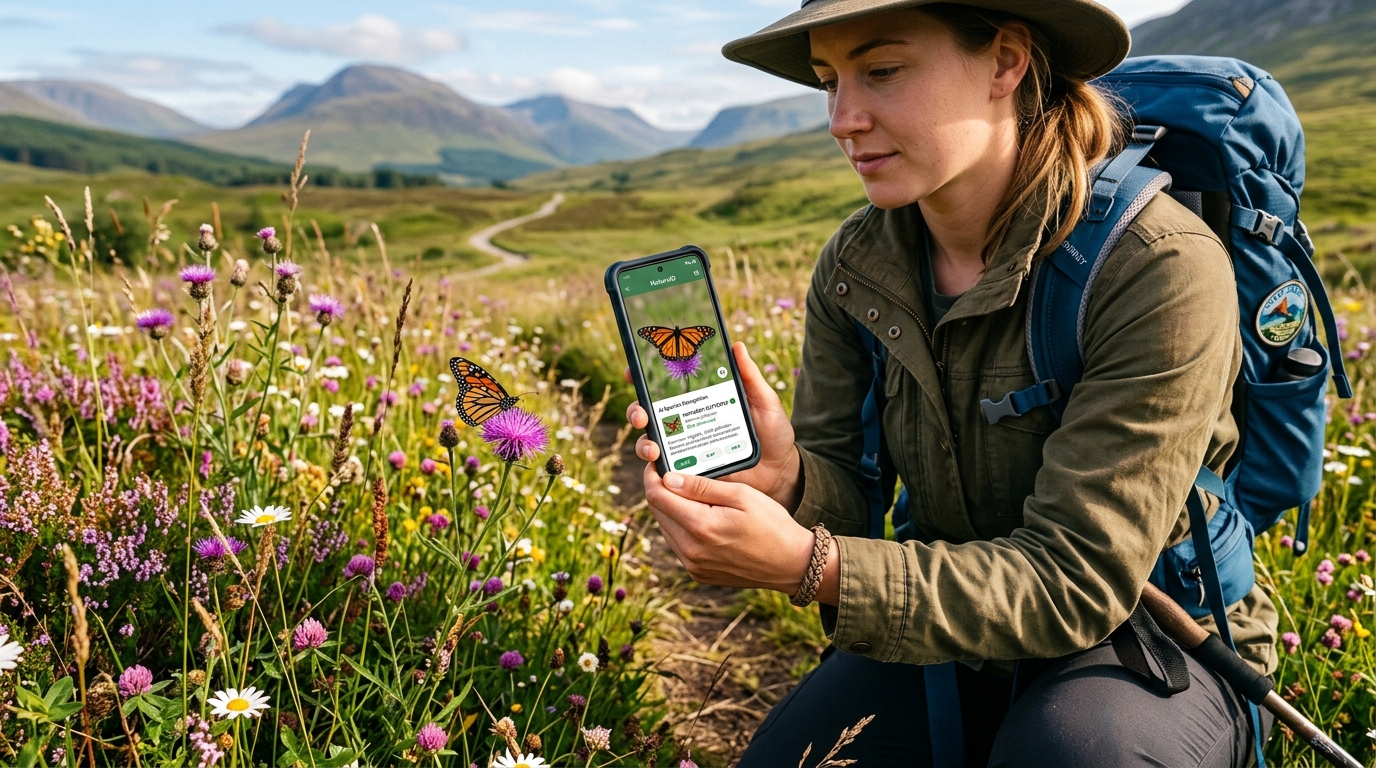
For birdwatching, Merlin Bird ID remains one of the most impressive free wildlife apps available.
Developed by the Cornell Lab of Ornithology, Merlin can identify birds through photos, sounds, or a series of identification questions. During testing, the Sound ID feature proved particularly useful in forests, wetlands, and coastal habitats where birds are often heard before they are seen.
Its location-aware species suggestions also help users understand which birds are realistically present within a specific ecosystem.
Exceptional bird-identification accuracy
Sound identification is remarkably useful
Location-based species lists
Excellent educational content
Completely free
Birds only
Requires downloaded bird packs for some regions
Not intended for route planning
Free.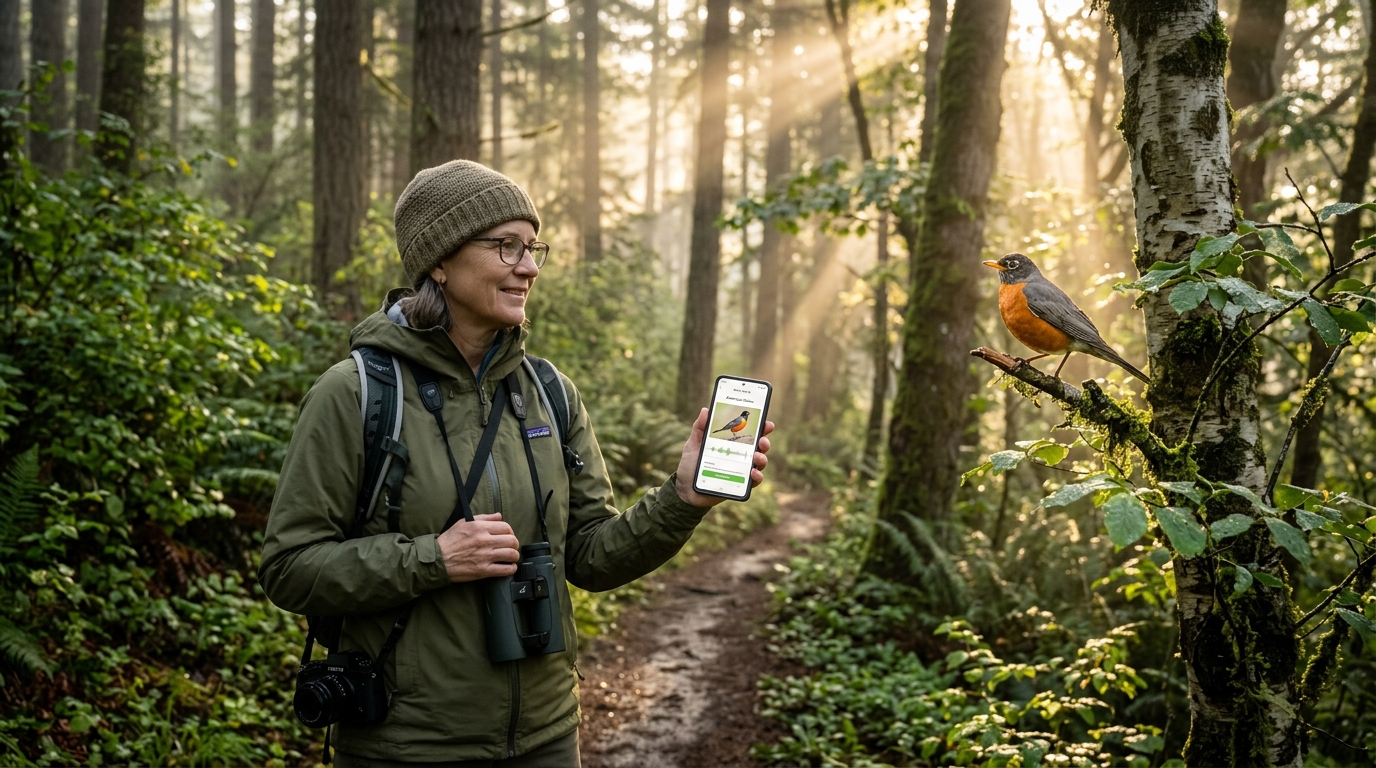
Seek is arguably the best wildlife app for beginners, families, and children.
Instead of requiring users to upload observations or participate in community science, Seek provides instant identification through the phone's camera. During testing, it made spontaneous wildlife encounters far more engaging, especially when exploring state parks, nature preserves, and national wildlife refuges.
The badge and challenge system also encourages exploration without encouraging risky behavior around wildlife.
Extremely beginner-friendly
Real-time identification
Works well for families
Covers plants, animals, fungi, and insects
Free
Less detailed than iNaturalist
Fewer advanced features
Identification confidence varies by species
Free.
Serious birders often graduate from Merlin to eBird.
While Merlin focuses on identification, eBird focuses on recording observations and discovering birding hotspots. The app uses a massive database of bird sightings and provides location-specific checklists based on season, geography, and historical records.
During testing, eBird proved especially useful in ecosystems where bird activity changes dramatically throughout the year, such as coastal migration routes and prairie wetlands.
Outstanding bird-distribution data
Useful hotspot maps
Excellent for trip planning
Valuable for conservation research
Free
Primarily for bird enthusiasts
More complex than Merlin
Less useful for casual wildlife watchers
Free.
Google Maps may seem like an unusual inclusion, but it consistently proved useful for locating wildlife refuges, nature preserves, national wildlife areas, observation platforms, visitor centers, and trailheads.
Importantly, responsible wildlife watching usually happens from established viewing areas rather than by chasing GPS coordinates shared online. During testing, Google Maps often became the simplest way to access legitimate viewing locations while avoiding trespassing or habitat disturbance.
Excellent navigation
Helps locate official wildlife-viewing areas
Useful for planning ecosystem-specific trips
Free
Not a wildlife-identification app
No species-tracking features
Limited educational content
Free.
For overall wildlife watching across America's diverse ecosystems, iNaturalist emerged as the strongest all-around choice.
Unlike many wildlife apps that focus narrowly on a single taxonomic group, iNaturalist helps users identify and document virtually any organism they encounter while contributing meaningful data to conservation science. Its educational value, species coverage, and ethical observation framework make it uniquely useful for wildlife enthusiasts.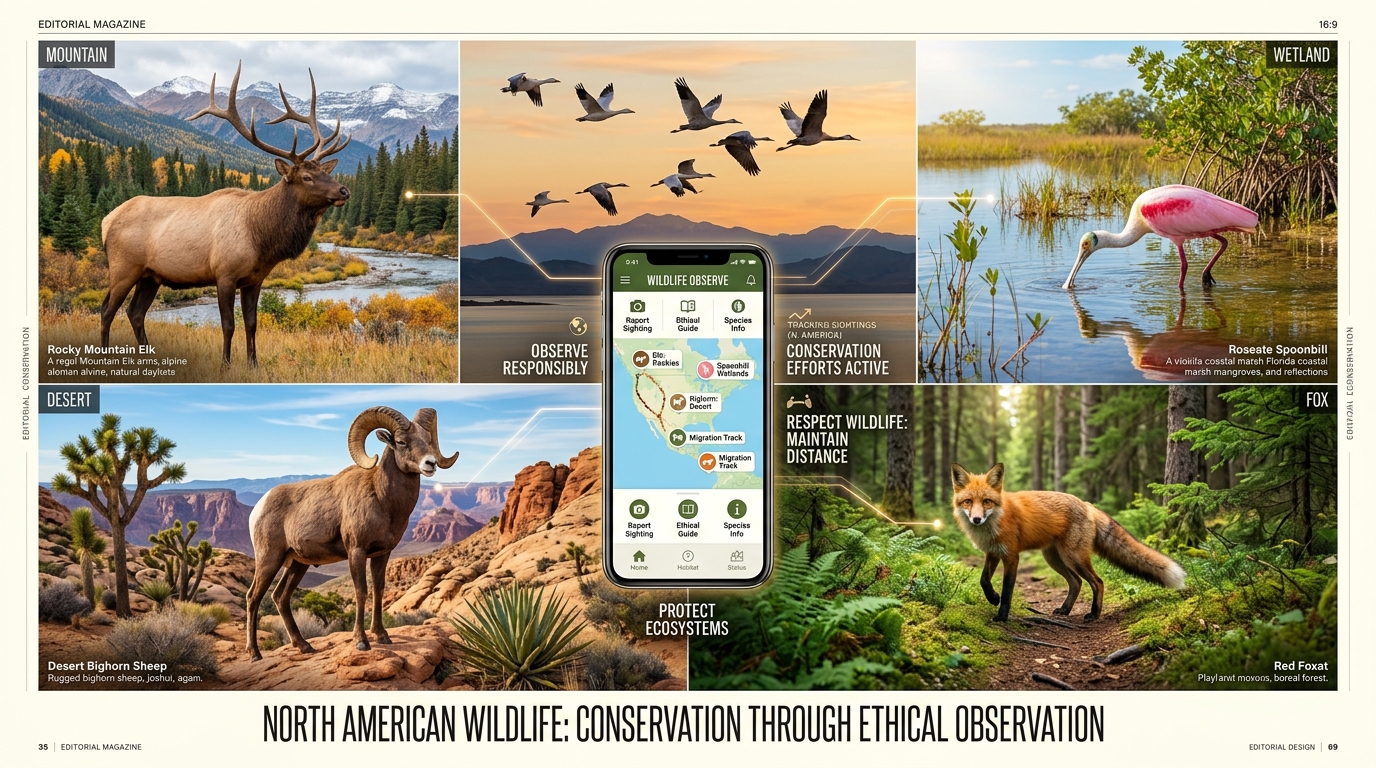
However, the most effective setup during testing was:
iNaturalist for documenting wildlife observations
Merlin Bird ID for bird identification and sound recognition
eBird for finding birding hotspots and seasonal activity
Seek for beginner-friendly exploration
Google Maps for locating official viewing areas
Together, these apps create a powerful toolkit for observing wildlife responsibly across forests, wetlands, deserts, mountains, grasslands, and coastal ecosystems throughout the United States.
The best wildlife encounters are often the ones that leave no trace. These apps help travelers learn more about the natural world while respecting the animals and habitats that make those experiences possible.